Market Truths
Zillow vs Reality
Where automated estimates get it wrong, what they quietly get right, and what actually sets a home's value.
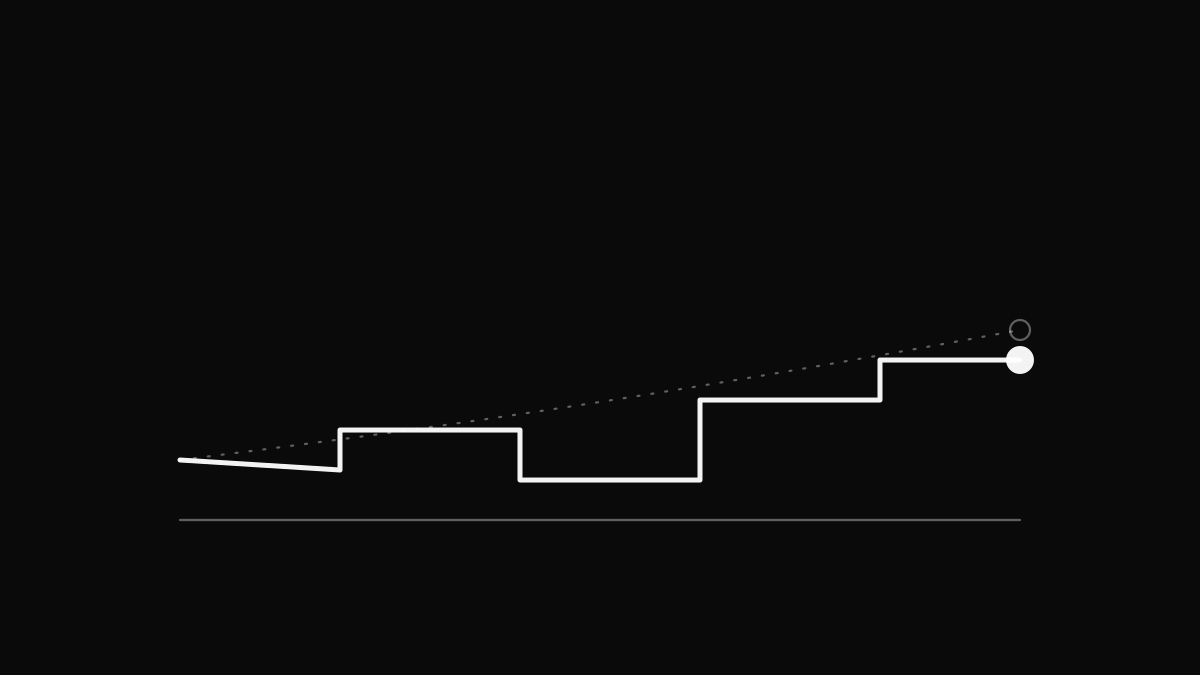
Every seller has looked up their own estimate, and every buyer has looked up someone else’s. The number arrives with a confidence that feels like an appraisal, and it is not one. It is the output of an automated valuation model, an AVM, of which Zillow’s Zestimate is simply the best known. There is nothing wrong with the model. There is something wrong with how most people read it.
How an Automated Estimate Is Made
In general terms, an AVM is a comparable-sales regression run at enormous scale. It takes what is publicly knowable about a home, recorded sales, tax records, square footage, beds and baths, lot size, listing histories, and finds the statistical relationship between those facts and the prices similar homes have actually sold for. Then it applies that relationship to your address.
This is a reasonable thing to do, and the people who build these models are good at it. But notice what the inputs are: facts that exist in a database. The model has never stood in the kitchen. Everything that follows comes from that one limitation.
Where the Model Is Genuinely Useful
An automated estimate earns its keep in two places. The first is direction. Watched over months, the estimate tracks the trend of a market reasonably well, because trend is exactly the kind of pattern a regression over many sales is built to catch. If the line has been climbing or sagging, that movement usually means something.
The second is ballpark. For a conventional home in a neighborhood full of similar homes that sell often, the estimate lands close enough to be a useful starting orientation. It tells you which conversation you are in. It does not tell you where the conversation ends.
What the Model Cannot See
The model misses where the databases go quiet, and they go quiet in exactly the places value is decided.
Condition is invisible to it. The meticulously kept home and the tired one next door can carry the same beds, baths, and square footage, and the model will read them as twins. Interiors are invisible too: the renovation that never touched a permit, the layout that lives better than its floor plan, the finish level a photo would explain in two seconds.
Micro-location is a third blind spot. The backing to a busy road, the view, the cul-de-sac versus the cut-through street, these move real buyers and sit nowhere in the public record. Unique homes suffer most of all, because a regression needs comparables and a one-of-a-kind property has none. And in a fast-turning segment, where conditions shift quicker than closed sales can record them, the model is honestly reporting a market that no longer exists.
Two Homes, One Estimate
Picture two houses on the same street, built the same year by the same builder, identical in every field a database holds: beds, baths, square footage, lot. One has a new roof, a renovated kitchen done without permits, and a backyard that ends in trees. The other has the original everything and a rear property line shared with a shopping center’s loading dock. The model prints nearly the same number for both, because from where it sits they are the same house.
A buyer standing in the driveway would separate them in under a minute, and the eventual sale prices might diverge by a distance worth more than an agent’s entire fee. That gap, between what the database can know and what a person on the sidewalk can see, is not a flaw to fix. It is the permanent shape of the problem, and every automated estimate you will ever read lives inside it.
Why the Triangle Makes It Harder
Fast-growing markets are the model’s worst weather, and this region is one. New construction skews the comparable pool, because builder incentives make recorded prices read higher than what buyers effectively paid. Neighborhoods turn over unevenly, so a model trained on one pocket’s sales quietly reprices the pocket next door that has not moved yet. And when a segment accelerates or stalls, the closed sales a regression depends on describe a market that is already sixty to ninety days old. None of this makes the estimate useless here. It makes the margin of error wider exactly when the stakes are highest, which is worth knowing before you anchor a decision to the number.
The Comps and the Condition Are the Finish
None of this is a reason to sneer at the estimate. It is a reason to place it correctly. A model is a starting point. The finish is the work the model cannot do: standing in the home and reading its condition honestly, then weighing it against a handful of comps chosen because a real buyer would genuinely have cross-shopped them, not because they were nearby. Three honest comps and an honest read of condition will settle a value question that no algorithm can, because they contain the information the algorithm never had.
When the estimate and the comps agree, good, you have your bearings twice over. When they disagree, believe the comps. They are made of actual decisions by actual buyers, and that is the only vote that ever sets a price.
How We Use This
We look at the automated estimates the same way you do, as a first read and a trend check, and we take them seriously for exactly that much. Then we do the finish work: walk the home, read its condition, and build the short list of comps that would survive a skeptical buyer’s scrutiny. That is the number we will defend, to you and to the other side of the table.