Neighborhood Guide
Raleigh
A grounded read on Raleigh's neighborhoods, commute lines, schools, and how the city actually lives, for anyone weighing a move to the Triangle.
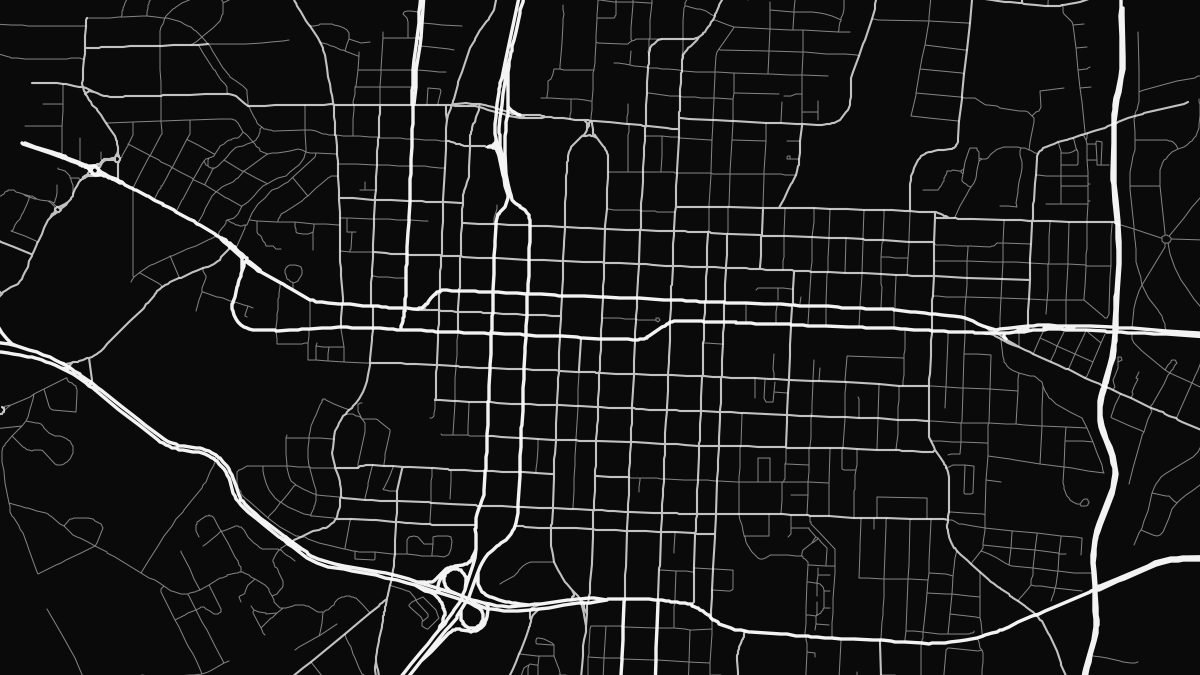
Raleigh is the anchor of North Carolina’s Triangle, the state capital, and the largest of the three cities that share the region with Durham and Cary. It draws people for the jobs, the universities, and a pace that stays livable as it grows. This guide is the read we give clients before the first showing, so a home meets the life you are actually building, not just the search filter you started with.
How Raleigh Is Laid Out
Downtown Raleigh sits at the center, with distinct districts radiating out. Inside the Beltline you find the older, tree-lined neighborhoods, walkable pockets, and the shortest commutes. North Raleigh trades that walkability for more space, newer construction, and strong schools. To the southeast, growth is newer and pricing tends to start lower. Each direction runs on its own clock, and two streets a mile apart can behave like different markets.
The Neighborhoods People Ask About
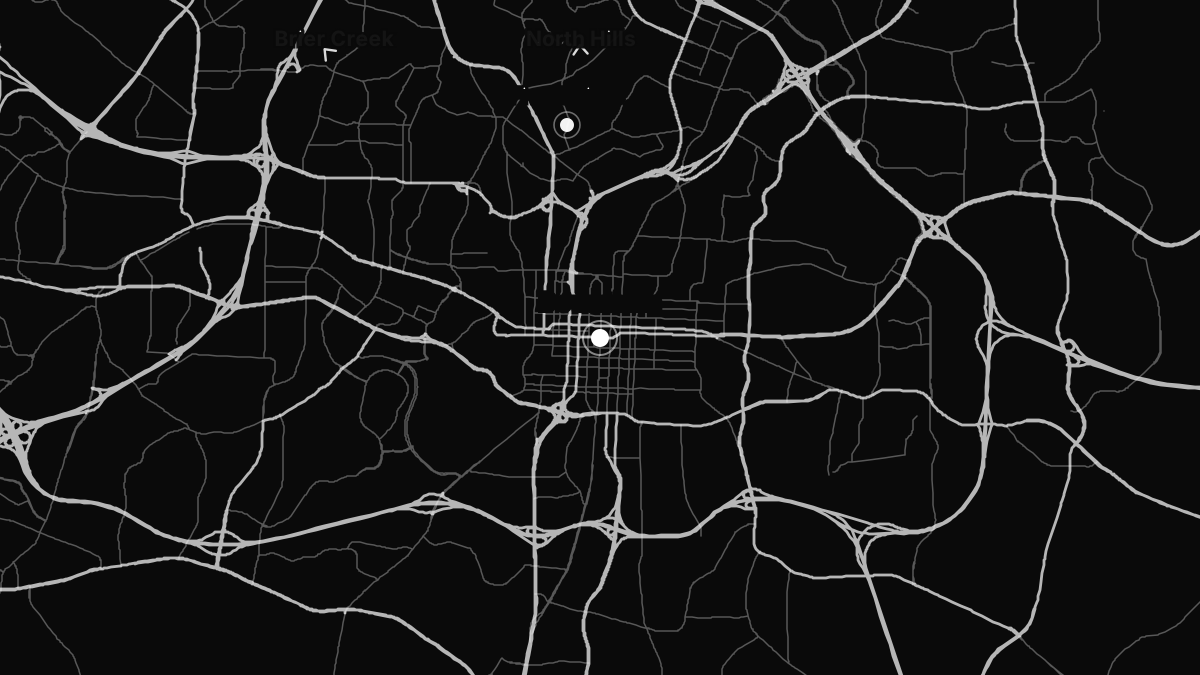
- Five Points and Hayes Barton. Established, close in, and among the most sought after inside the Beltline. Character, mature trees, and short trips downtown.
- North Hills. A live-work-shop district that reads more urban than its address suggests, with newer condos and townhomes alongside single-family streets.
- Brier Creek and the northwest. Convenient to the airport and Research Triangle Park, with a lot of newer construction. Popular with people relocating for work.
- Downtown and the warehouse districts. For buyers who want to walk to dinner and a game, not drive to them.
Commute and Daily Life
Most of Raleigh runs on the car, though the close-in neighborhoods soften that. The practical questions are where you work and how often you go in. Research Triangle Park, downtown Raleigh, and the RDU airport corridor pull traffic in predictable patterns, and a fifteen-minute difference in address can mean a real difference in your morning. We read those patterns for you before you fall for a floor plan.
Schools and Growth
Wake County runs a single large school system with an assignment model that does not map neatly to your street, so we confirm the specifics for any address you are serious about rather than assume them. Growth is the constant here: inventory, pricing, and demand move faster than a static impression of the city can keep up with, which is exactly why the read has to be current.
The Housing Stock, Honestly
The age of a Raleigh home tells you most of what to expect before you walk in. Inside the Beltline, the bungalows, cottages, and Tudors of the early twentieth century carry the character everyone falls for, and they carry the systems of their era with it: original sewer lines under mature oaks, wiring that has been updated in stages, and additions of very mixed quality bolted on across a century. On the Beltline fringe, the midcentury ranches are the quiet value of the city, single-level living with good bones and floor plans that renovate well. North Raleigh’s eighties and nineties two-stories are the settled middle, first-generation systems mostly replaced by now, landscaping matured into real shade. And the newest rings, from Brier Creek townhomes to downtown condos, sell a modern envelope and low maintenance in exchange for HOA life and less land. None of these is better. They are different ownership experiences, and the right one depends on how much of your weekend you want the house to claim.
Before You Offer Here
A few checks earn their cost in Raleigh specifically. On anything built before about 1970, scope the sewer lateral with a camera before you waive anything, because the beautiful oak canopy that sold you the street has roots, and the repair runs five figures when it finds the original clay pipe. Pull the permit history on renovated older homes, since the gap between a renovation and a flip is usually visible in the paperwork before it is visible in the walls. Near downtown creeks, check the flood maps yourself rather than assuming. And on any address you get serious about, confirm the school assignment directly, because Wake County’s model does not promise the school around the corner. None of this is a reason to hesitate. It is the short list that lets you move fast safely, which in Raleigh’s better pockets is the whole game.
How We Use This
A neighborhood guide is a starting point, not a verdict. When we work together, we translate this into your specifics: your commute, your must-haves, and the way you plan to live in the home. Buying is really buying for two people, you today and the buyer you sell to later, and Raleigh’s micro-markets reward getting both right.
Street map data © OpenStreetMap contributors