Neighborhood Guide
Durham
A grounded read on Durham, the Triangle's most characterful city, from its revived downtown to its distinct neighborhoods, for anyone weighing a move.

Durham is the most distinctive of the three Triangle cities. Home to Duke University and a downtown that turned old tobacco warehouses into one of the region’s liveliest food and startup scenes, it trades some of the polish of its neighbors for character and a stronger sense of place. This guide is the read we give clients before the first showing, so a home fits the life you are building rather than the search filter you started with.
How Durham Is Laid Out
Durham radiates out from a compact, walkable downtown that has been genuinely reinvented. Close to the center you find historic neighborhoods with real architecture and mature trees. Around Duke’s campus, demand runs steady and pricing reflects it. To the south and toward the RTP and Chapel Hill lines, you find newer construction and more space. Two neighborhoods a mile apart can feel like different cities, which is exactly why the read has to be local.
The Neighborhoods People Ask About
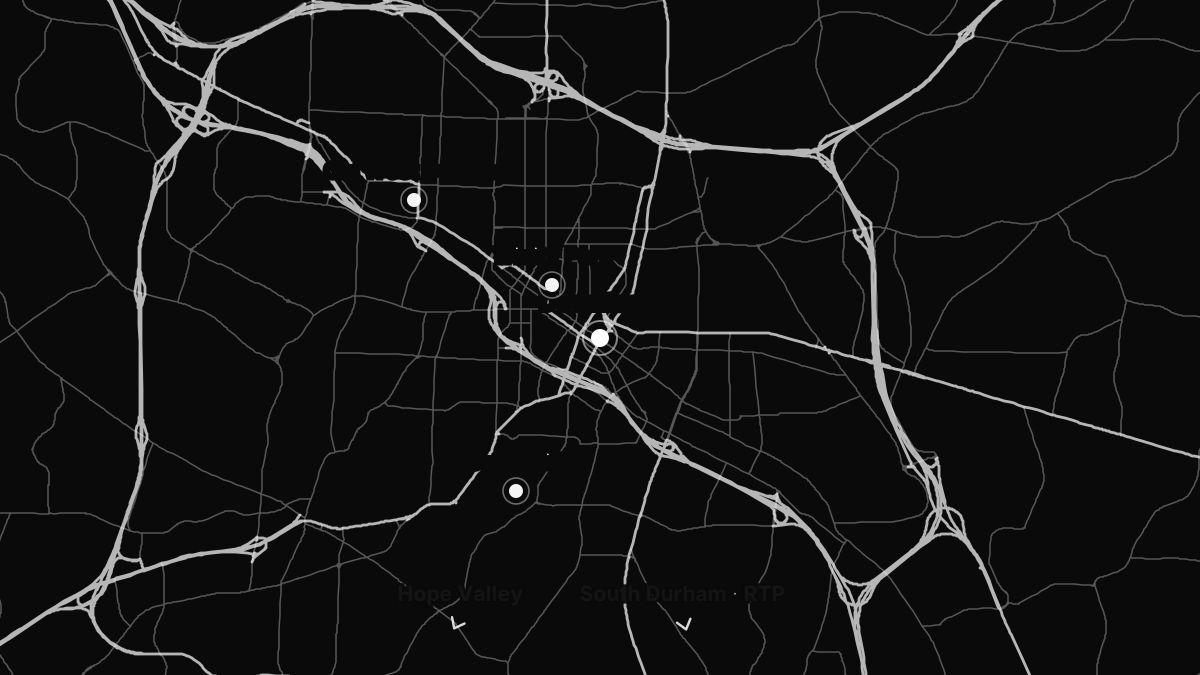
- Trinity Park and Old West Durham. Historic, close to Duke and downtown, and among the most sought after for character and walkability.
- Forest Hills and Hope Valley. Established, leafy, and settled, with larger lots and a quieter pace.
- Downtown and the warehouse districts. For buyers who want to walk to dinner, a show, and a game rather than drive to them.
- South Durham toward RTP. Newer construction convenient to the Park, popular with people relocating for work.
Commute and Daily Life
Durham runs on the car, though the close-in neighborhoods soften that. Research Triangle Park, Duke, and downtown pull traffic in predictable patterns, and the practical question is where you work and how often you go in. Chapel Hill and Raleigh are both reachable, which widens where you can live for a given job. We read those patterns for you before you fall for a floor plan.
Schools and Growth
Durham has its own school system, separate from Wake County, and its assignment and options do not map neatly to your street, so we confirm the specifics for any address you are serious about rather than assume them. Durham’s momentum is real, and inventory, pricing, and demand move faster than a static impression of the city can keep up with, which is exactly why the read has to be current.
The Housing Stock, Honestly
Durham’s character is its stock, and the stock asks for a sharper eye than anywhere else in the Triangle. The historic neighborhoods carry mill cottages, foursquares, and 1920s bungalows, many on pier foundations, nearly all of them renovated at some point in the last thirty years, and the quality of that renovation is the entire question. A lovingly restored Trinity Park foursquare and a fast flip two streets over can photograph identically. Forest Hills and Hope Valley hold the midcentury chapter, larger lots and settled streets. Then the modern layer: warehouse conversions and new condos downtown, and the 2000s-forward neighborhoods of south Durham toward the Park, which behave like their Wake County counterparts. The spread of eras is wider here than in the neighboring cities, which is exactly why Durham rewards buyers who read houses instead of listings.
Before You Offer Here
Three checks matter most in Durham. First, pull the permit history on any renovated older home, because the difference between a renovation and a flip lives in the paperwork, and unpermitted structural or electrical work in a century-old house is your problem the day after closing. Second, get the inspector under the house: pier-and-beam foundations are not a defect, they are a design, but they want a crawlspace read, and the humid climate makes that read non-optional. Third, on downtown conversions and condos, read the building documents with the same care you read the unit, since the roof, the elevator, and the reserves are all part of what you are buying. And in the fast-moving close-in pockets, write your offer with the appraisal in mind, because streets that reprice quickly can outrun the closed sales an appraiser is allowed to use. Durham pays for diligence better than any market we work.
How We Use This
A neighborhood guide is a starting point, not a verdict. When we work together, we translate this into your specifics: your commute, your must-haves, and the way you plan to live in the home. Buying is really buying for two people, you today and the buyer you sell to later, and Durham’s distinct micro-markets reward getting both right.
Street map data © OpenStreetMap contributors