Neighborhood Guide
Apex
A grounded read on Apex, the fast-growing family town southwest of Cary with a real historic downtown, for anyone weighing a move.
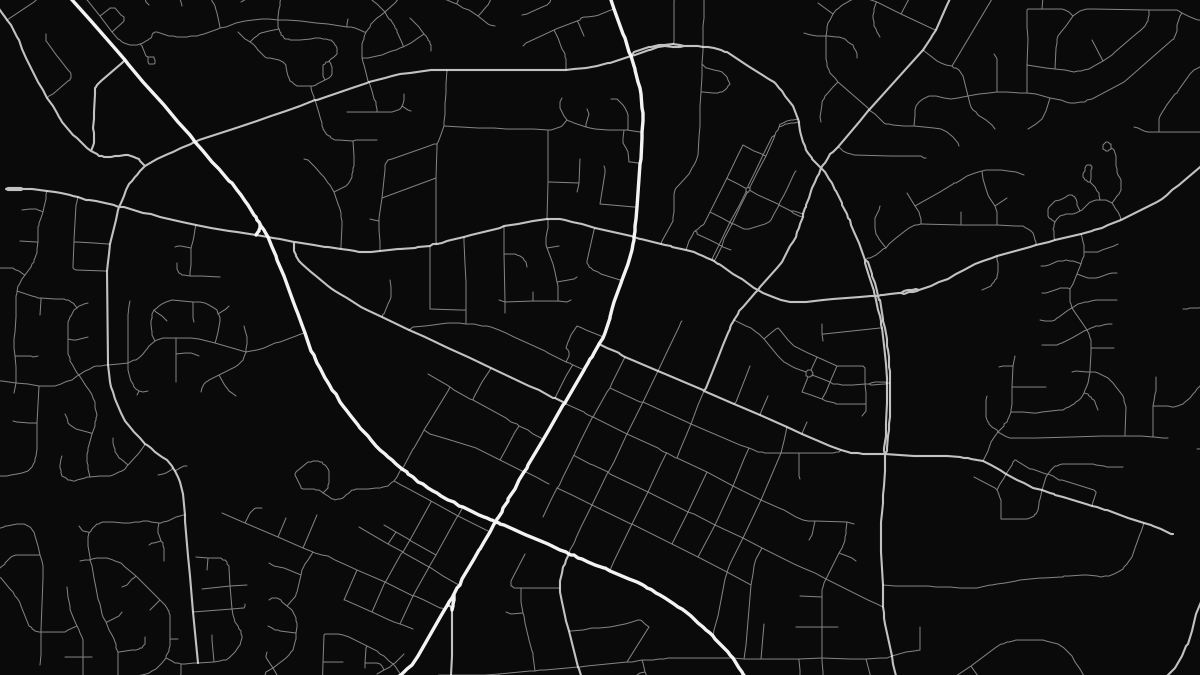
Apex sits southwest of Cary and has spent the last two decades turning from a small railroad town into one of the Triangle’s most requested addresses. The draw is straightforward: a genuinely historic downtown, family-oriented neighborhoods, and access to the same Wake County schools and services that made Cary famous, often with a little more room to breathe. This guide is the read we give clients before the first showing, so a home fits the life you are building rather than the search filter you started with.
How Apex Is Laid Out
Downtown is the anchor. Salem Street is a preserved historic main street with shops and restaurants in original storefronts, and the neighborhoods closest to it carry the oldest homes and the most character in town. From there, Apex fans out in rings of newer construction. The established communities of the last two decades sit closest in, and the newest master-planned growth pushes west and south toward Jordan Lake, where builders are still actively working. The result is a town where the age of the house tracks the distance from Salem Street more reliably than almost anywhere else in the region.
The Neighborhoods People Ask About
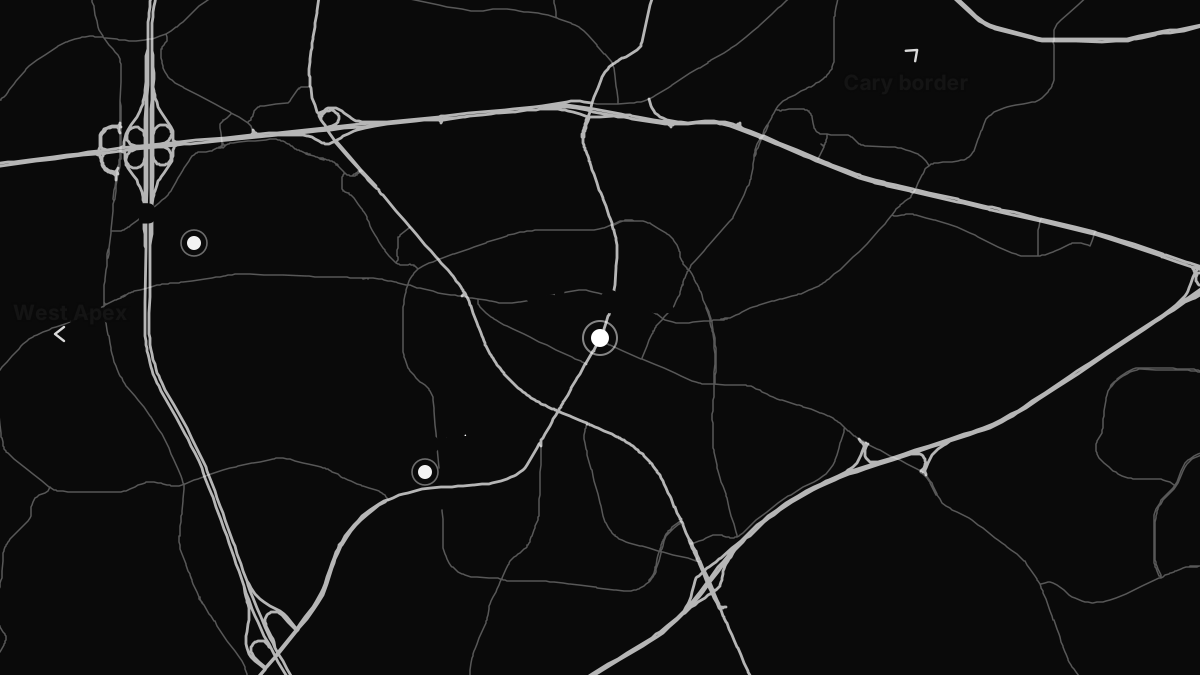
- Downtown and the Salem Street blocks. Historic homes and walkable streets at the center of town. Scarce, charming, and the first thing visitors fall for.
- Bella Casa, Scotts Mill, and the established ring. The communities built as Apex first boomed, now settled, with mature landscaping and a proven track record for resale.
- West Apex. The newest master-planned communities, with new construction, modern floor plans, and amenities, for buyers who want new and are willing to be a little farther out while the roads catch up.
- The Cary border. For buyers shopping both towns at once, the line between them matters less than the specific street, and we treat it that way.
Commute and Daily Life
Apex is positioned in the southwest corner of the Triangle, and the practical question is which direction you drive. Research Triangle Park and the airport are reachable on the expressway loop, and the town’s highway access has improved markedly as the outer loop was completed. The honest trade-off is growth itself: the main corridors carry more cars every year, and the difference between a home near an interchange and one behind a two-lane road is a real difference in your morning. We read that map with you before you fall for a floor plan.
Schools and Growth
Apex sits in the Wake County school system, whose assignment model does not map neatly to your street, so we confirm the specifics for any address you are serious about rather than assume them. Growth is the defining fact of the town: demand from relocating families keeps pressure on inventory, new communities open in phases, and the town that a five-year-old impression describes is not the town you will be buying into. That is exactly why the read has to be current.
The Housing Stock, Honestly
Because the age of an Apex house tracks its distance from Salem Street, the stock reads like tree rings. The historic core is a small, genuinely scarce pocket of older homes that trade rarely and command their scarcity. The established ring, the Bella Casa and Scotts Mill era, is now old enough that you should expect the first big replacement cycle: roofs, HVAC, and water heaters from the original build are reaching the end of their design lives, which makes the service records a routine question rather than an awkward one. West Apex is the new-construction frontier, where builders sell modern floor plans and amenity packages in phases, and where the honest trade is newness against distance while the road network catches up. Three rings, three different ownership experiences, one school system and downtown shared among them.
Before You Offer Here
Apex adds a few wrinkles worth knowing in advance. In the active master-planned communities, understand phase pricing: the builder’s current phase quietly reprices every resale around it, in both directions, so what the neighborhood sold for two years ago is context, not a ceiling. If you buy resale where the builder is still building, remember that when you eventually sell, you may be competing with the sales office and its incentives down the street, which argues for buying the lot and floor plan the builder cannot easily reproduce. Stack the full cost of ownership before comparing homes: HOA dues and amenity fees vary widely between communities and change the monthly math more than a small price difference does. And drive your actual commute at the actual hour, because the difference between an address near the interchange and one behind a still-two-lane road is the difference this town most often surprises people with.
How We Use This
A neighborhood guide is a starting point, not a verdict. When we work together, we translate this into your specifics: your commute, your must-haves, and the way you plan to live in the home. Buying is really buying for two people, you today and the buyer you sell to later, and Apex’s steady family demand rewards getting both right.
Street map data © OpenStreetMap contributors